Snowboard ili skijanje: šta je lakše naučiti na Kopaoniku?
The question of whether skiing or snowboarding is easier for beginners at Kopaonik has no universal answer, as it strictly depends on individual motor skills and goals: skiing offers an easier first few hours due to an intuitive forward-facing stance and two independent skis, but progressing from snowplough to parallel turns demands high precision; snowboarding has a steeper initial learning curve over the first two days due to sideways balance, but once edge transitions click, linking fluid turns and exploring varied terrain progresses rapidly and naturally.
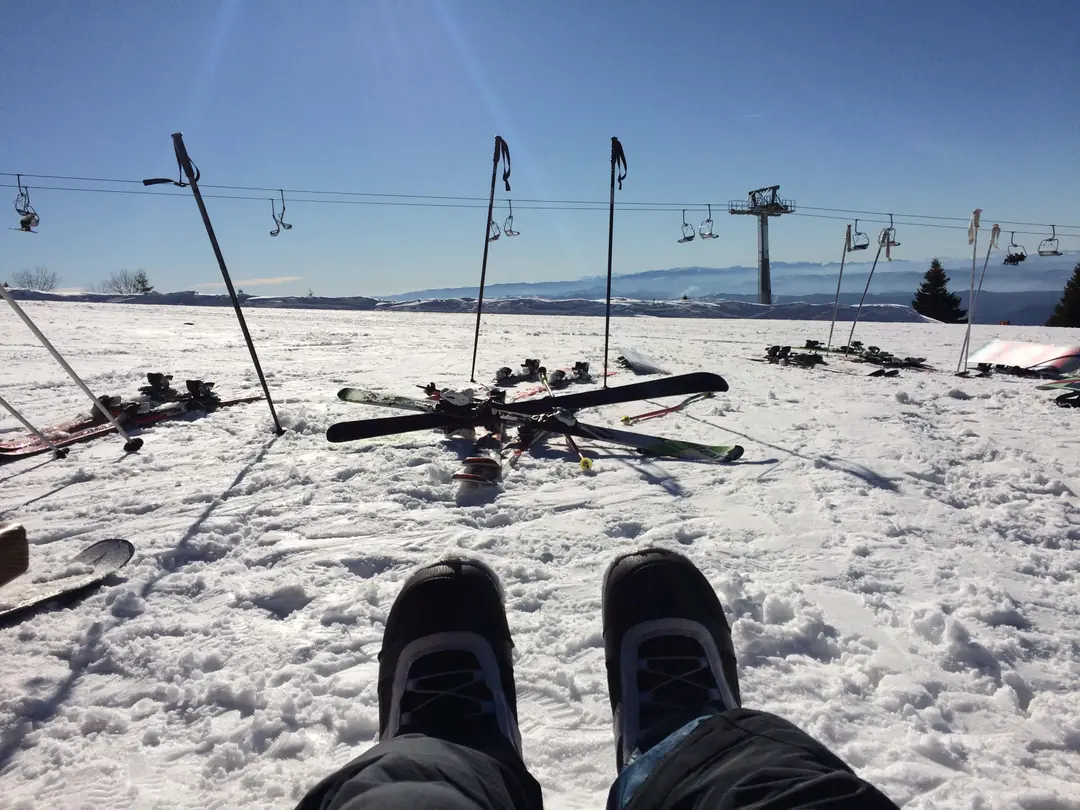
Choosing between skiing and snowboarding is not about which is universally "better", but which fits your motor patterns and goals. Skiing offers an easier first hour thanks to an intuitive forward-facing stance and two independent skis, while snowboarding rewards you faster with fluid movement once edge transitions click. A certified coach helps you understand the genuine differences and choose without lost vacation time.
Key takeaways
- Initial stance & biomechanics: Skiing offers a natural forward-facing stance with two independent feet, whereas snowboarding requires adapting to a lateral stance with both feet strapped to a single board.
- Early speed control: Skiers learn to control speed quickly using a snowplough (wedge), while snowboarders manage pace via heel and toe edge sliding requiring precise balance control.
- Individual progression curve: Neither sport is universally easier — learning speed varies based on prior board sports or skating experience, core stability, coordination, and comfort on snow.
- Boot comfort & equipment ergonomics: Snowboard boots are soft and far more comfortable for walking, while rigid ski boots deliver direct leverage but feel stiffer off the snow.
- Value of certified coaching: Regardless of discipline, certified instruction prevents defensive body habits, mitigates clumsy falls, and ensures safe progress on gentle Kopaonik slopes.
Best for
Beginners of all ages deciding between skiing and snowboarding on Kopaonik, seeking an objective, realistic comparison before booking their first winter lesson.
Skiing vs Snowboarding: Key Differences in Learning and Technique
A realistic evaluation of early milestones, equipment, speed control, and learning curves without bias.
| Comparison Criterion | Skiing for Beginners | Snowboarding for Beginners | What to Consider When Choosing |
|---|---|---|---|
| First contact with snow & basic stance | Natural forward-facing stance with eyes downhill; feet and legs move independently. | Side-on stance (regular or goofy); both feet are locked to a single continuous board. | Skiing feels immediately more intuitive on hour one, while snowboarding requires adjusting to sideways balance. |
| Initial stopping & speed control | Snowplough (wedge) technique offers simple, mechanical deceleration within the very first hour. | Braking is achieved via heel- or toe-edge sideslipping, requiring finer balance and edge angle modulation. | Skiers gain early confidence stopping, whereas snowboarders learn nuanced edge pressure and commitment from day one. |
| Linking first turns | Progressing from snowplough to parallel turns requires unweighting the inside ski and coordinating weight shifts. | Once weight transfer from heel edge to toe edge clicks, linking turns becomes fluid, rhythmic, and natural. | Different learning curves: skiing is easier to start but harder to master parallel; snowboarding is harder to start but accelerates into flowing turns. |
| Gear ergonomics & walking comfort | Rigid plastic ski boots make walking awkward; carrying two skis and poles demands upper-body effort. | Soft, cushioned boots allow comfortable walking; however, stepping in requires sitting or bending after chairlifts. | Snowboard boots are far more comfortable off-piste, but getting onto chairlifts requires unclipping the rear foot. |
| Prior sports experience influence | More accessible for those without board sports background; poles provide added psychological security. | Faster progression for learners with skateboarding, surfing, wakeboarding, or rollerblading experience. | If you already possess board-sports muscle memory, snowboarding will feel familiar within your first few drills. |
| Progression curve & terrain adaptation | Beginners comfortably navigate gentle blue pistes quickly, but steeper red pitches demand technical precision. | The first couple of days may involve minor falls, but solid two-edge mastery opens versatile all-mountain terrain. | Neither sport is universally easier — your pace depends strictly on individual coordination, fitness, and practice regularity. |
Illustrative 120-Minute Beginner Coaching Framework
How a certified coach structures early milestones on snow without rushing and with fatigue management.
First 25 min: Equipment orientation, anatomical binding alignment, and establishing a relaxed neutral stance.
Middle 55 min: One-foot-strapped gliding drills, heel-edge sideslipping, and controlled deceleration on gentle slopes.
Final 40 min: Introducing toe-edge pressure and early directional guidance, strictly if rider stability permits.
Biomechanics and customized first-step adaptation
The biggest misconception among beginners is searching for a universal formula of what is easier. Skiing provides immediate frontal stability on day one, while snowboarding rewards perseverance with unmatched fluidity once both edges are unlocked. Success on Kopaonik does not come from rushing up the mountain, but from properly fitted boots, customized binding angles tailored to your joints, and progressive practice on safe nursery slopes without fear of falling.
Official Lesson Rates
Lessons follow Trajko Marinković's official standard packages (from 1h to 8h). No surcharges apply for comparative analysis.
Trial Lesson
Starter Package
Intensive
Full Course
Mountain Tour
Frequently Asked Questions: Skiing vs Snowboarding
Is it harder to learn skiing or snowboarding?
How many days to learn snowboarding?
How long is a single snowboard lesson?
How much does a snowboard instructor cost at Kopaonik?
Related Programs & Mountain Guides
Explore our other coaching packages and read verified mountain tips from instructor Trajko.
Other specialized snowboard programs
Adult Beginners
Overcome fear and master fundamentals at your own comfortable pace.
Private vs Group Lessons
An honest breakdown of coaching focus, learning pace, and value.
Skiing to Snowboarding Transition
Leverage your existing snow and slope intuition, adapt to a lateral stance, and eliminate the habit of leaning back.