Freestyle Snowboard for Beginners at Kopaonik: Snow Park Basics & Jumps
Freestyle snowboard coaching and terrain park basics on Kopaonik are designed for progressing riders who already reliably link turns and control speed on groomed blue slopes: progression never starts with big jumps, but begins with flat-ground stance awareness, strict snow park safety etiquette, flat-base slides on low boxes (50-50), and optional small hops only when balance is confirmed. A certified helmet is mandatory, and coaching utilizes Trajko Marinković official standard packages (e.g. 4h block for €185 or 5h for €225) with zero park surcharges, guided by clear technical evaluations of when to progress and when to pause.
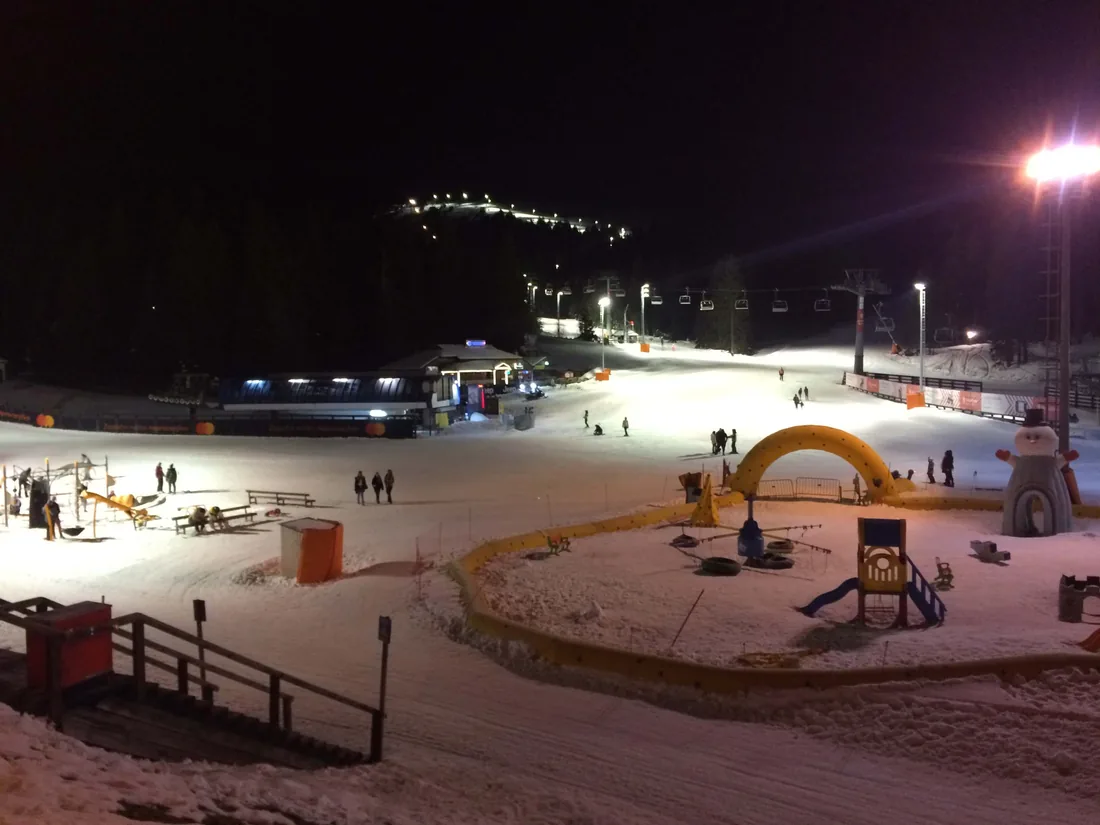
Freestyle snowboarding and snow park progression demand solid fundamentals, discipline, and respect for mountain safety. This is not a program for day-one beginners still working on stopping, but for riders who already reliably link turns on blue slopes and wish to explore freestyle features with minimal risk. While injury risk can never be fully eliminated in action sports, it is drastically mitigated through strict park etiquette, mandatory helmets, and disciplined steps — from flat-ground balance to low boxes and controlled small hops without empty promises.
Key takeaways
- Mandatory prerequisites before park entry: Freestyle coaching is not suitable for absolute beginners — riders must demonstrate solid speed control, balance, and reliable stopping on both heel and toe edges on blue slopes beforehand.
- Progressive slope-to-park methodology: Drills start with flat-ground and nursery fundamentals (centered stance, ollie mechanics, switch riding), progress to park etiquette and basic box sliding (50-50), with jumps introduced only as an optional progression when strictly ready.
- Safety protocol & snow park etiquette: Strict adherence to park rules (line inspection, waiting for landing zones to clear, never stopping in blind spots, and mandatory certified helmets) mitigates risk, although injury hazards can never be fully eliminated.
- Standard official package pricing: Freestyle introduction is booked through Trajko Marinković’s official standard packages (e.g. 4h intensive block for €185 or 5h for €225) scheduled by consultation, with zero artificial freestyle surcharge.
- Expert assessment without guaranteed tricks: Progress relies on individual athleticism, snow consistency, and safe biomechanics; your instructor never guarantees completing specific jumps or rails within fixed hours but builds genuine technical safety.
Best for
Recreational riders, youths, and intermediate snowboarders who already control speed and linked turns on open slopes, looking for progressive, safety-first coaching through snow park features, flat tricks, and gentle kickers on Kopaonik.
Riders who reliably link turns and stop on blue slopes, seeking a gradual, structured introduction to park etiquette, flat-ground tricks, simple boxes, and controlled hops.
Illustrative Progression: From Slope Control to the Snow Park
Structured overview of training phases, required prerequisites, drills, coaching evaluations, and clear criteria for when to pause before advancing.
| Phase | Prerequisites | Potential Drills | What Instructor Evaluates | When Not to Advance |
|---|---|---|---|---|
| Phase 1: Slope Control | Linked turns on blue slopes, confident edge braking on heel and toe, independent stopping. | Centered stance check, flat-base straight glides without catching edges, stationary pops (ollie/nollie), basic switch gliding. | Proper knee flexion, quiet upper body, centered weight distribution, and acute edge awareness. | If the rider loses balance on a flat base, exhibits edge panic, or relies on aggressive shoulder counter-rotation. |
| Phase 2: Park Etiquette & Safety | Phase 1 mastered, certified helmet worn, and respect for mountain safety rules. | Visual line inspection before drop-in, learning park signage, waiting for clear landings, and safe, swift clearing of fall zones. | Adherence to local park markings, patient turn-taking, and active awareness of other riders. | If the rider drops in without looking, ignores other riders’ space, or lingers in blind landing areas. |
| Phase 3: Simple Box Introduction | Total stability on flat snow glides, thorough understanding of park rules, and coach confirmation. | Approaching low flat boxes along the direct travel line, sliding with a 100% flat board base (50-50), controlled exit off the feature. | Zero instinctual attempts to brake on plastic, centered foot pressure, and forward-focused exit gaze. | If the rider tilts onto edges during the approach, leans back onto the tail, or displays anxiety about sliding the surface. |
| Phase 4: Small Kickers (Optional) | Prior phases solidly demonstrated, reliable run-in speed control, and strong leg conditioning. | Understanding kicker geometry and transition, straight run-in, subtle pop off the lip (ollie), body flexion for soft landing. | Knee absorption on the landing knuckle, maintaining straight trajectory without accidental air rotation. | If conditions are icy, if run-in speed cannot be precisely modulated, or if leg fatigue compromises landing stance. |
Three Golden Rules for Entering the Snow Park Safely
How structured coaching and biomechanics protect advancing riders from premature falls on Kopaonik.
1. Why edges are never used on a box
The biggest mistake beginners make is reflexively tilting onto an edge on plastic, which immediately kicks the board out. Your coach first develops flat-base confidence on groomed snow.
2. Park etiquette protects lives
Never drop in blindly. The landing zone must be 100% clear, and riders must know never to sit or stop in blind spots below features where visibility is limited.
3. Jumps are never mandatory
Every rider progresses at their own pace. If snow conditions or stamina are sub-optimal on any given day, jump progression is safely postponed in favor of fun slope drills.
“When learning to snowboard on normal trails, instructors constantly emphasize staying engaged on an edge — heel or toe — to steer and prevent edge catching. However, approaching a simple snow park box requires the exact opposite reflex: the base of the board must remain 100% flat on the feature. If a rider panics and lifts their toes or heels by even a millimeter, the metal edge catches the plastic and causes an instant slam. That is why box sliding is never rushed, but introduced only after a rider glides straight on flat snow with completely neutral edges without hesitation.”
Official Lesson Packages for Freestyle Training
Freestyle coaching utilizes Trajko Marinković official standard packages (e.g. 4h block €185 or 5h €225). There are zero freestyle or park surcharges.
1 Sat (60 min)
Provera stava, ravna baza i bazične flat vežbe na snegu.
3 Sata (Početni)
Učvršćivanje ravne daske, ollie poskoci i uvod u park.
4 Sata (2 x 2h)
Optimalan format: 2h tehnike na snegu + 2h bezbednog ulaska na box.
5 Sati (Komplet)
Sveobuhvatna obuka kroz više dana: bonton, box i opcioni skokovi.
8 Sati (Master)
Maksimalan fond časova za detaljan video fidbek i vođeni napredak.
Dogovor oko nivoa i termina za snow park
Pre ulaska u snow park instruktor uvek proverava stabilnost zavoja na uređenoj stazi. Termini i dužina blokova prilagođavaju se vašoj formi i uslovima na stazi.
Frequently Asked Questions About Freestyle & Snow Park
How much does a snowboard instructor cost at Kopaonik?
How do I choose the right lesson package for my skill level?
Is snowboard equipment included in the lesson price?
What happens if weather conditions are bad at Kopaonik?
Related Programs & Mountain Guides
Explore our other coaching packages and read verified mountain tips from instructor Trajko.
Other specialized snowboard programs
Carving Masterclass
Master dynamic edge hold and control on steep groomed terrain.
Teen Snowboard Lessons
Dynamic coaching for riders aged 13–18: balance, edge control, linked S-turns, and optional freestyle.
Adult Beginners
Overcome fear and master fundamentals at your own comfortable pace.
Recommended mountain guides
Ultimate Snowboard Guide to Kopaonik
Where terrain parks and open features are located, tracking snow conditions, and safe progression.
Season Prep Guide: Protective Gear & Landings
Importance of certified helmets, impact protection, and leg conditioning for jump absorption.